Guided notes
One clear task: match the target and breathe. To repeat the same note, select the target again, rest, then blow.
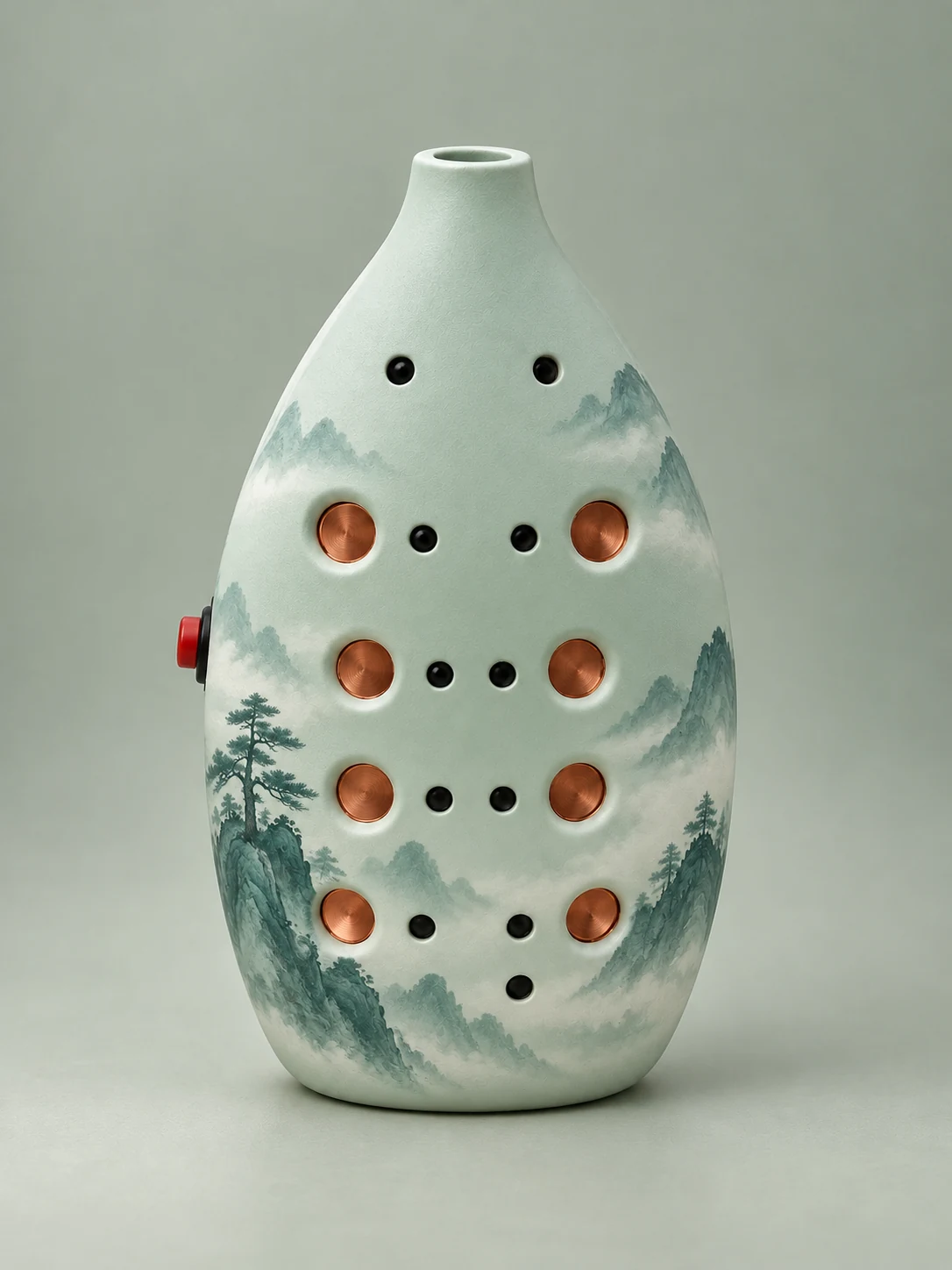
DESIGNED FOR AUTISTIC CHILDREN
Where Every Difference
Finds Its Rhythm.
Autistic children are our primary users. Xunova combines light-guided fingering, adjustable practice and replaceable sounds to explore music through each child’s own preferences.
Autism, sound preferences and our design ↗Four studies explore colour and pattern, rather than available production finishes. Final structure, materials and surface treatment need engineering validation.
THE INTERACTION / ONE NOTE AT A TIME
Light cues show the target fingering; touch and breath complete the task together. This C5 illustration needs E1 and E6 only, with all other inputs released.
A silent browser illustration. No prototype connection or microphone access. Inputs are arranged by number, not physical finger position.
Copper dot = target cue. Teal button = touched.
Choose C5 to begin. This is a silent browser illustration.
PROTOTYPE SOFTWARE CAPABILITIES
Five ways to begin, with a supporting adult choosing a suitable task. Repeat, take a break, or finish whenever needed.
One clear task: match the target and breathe. To repeat the same note, select the target again, rest, then blow.
The next cue waits until the current note is complete. Repeated notes in a song need a fresh breath; fingers can stay in place.
First N notes, then the first 2N, then 3N. Pause, repeat or move on between rounds.
After a count-in, fingering and breath events are checked against timing windows. Scores are not a learning or clinical assessment.
No assigned light cues. Explore 20 valid fingerings and their sounds; sustained notes depend on sample length and implementation.
DESIGNED FOR INDIVIDUAL SOUND PREFERENCES
A child may want to explore the xun, or prefer a familiar piano or flute sound. We separate the instrument’s form and fingering from its voice: a supporting adult can upload suitable samples while the way of playing stays familiar.
Let the child’s choices and responses guide the sound, rather than assigning a voice by diagnosis. Begin with a quiet preview, with the option to change it or stop.
Piano and flute are examples of samples that can be prepared, not built-in sound packs supplied here.
20 slots hold WAV samples for 20 pitches. Uploading replaces the corresponding slots and pauses audio. These are not 20 sound banks, and one recording does not automatically create every note.
Preparing samples ↗REAL PROTOTYPE / DEVELOPMENT RECORD
These are the physical prototype and CAD records. The colours, patterns and finishes in the appearance studies have not been realised on these prototypes.
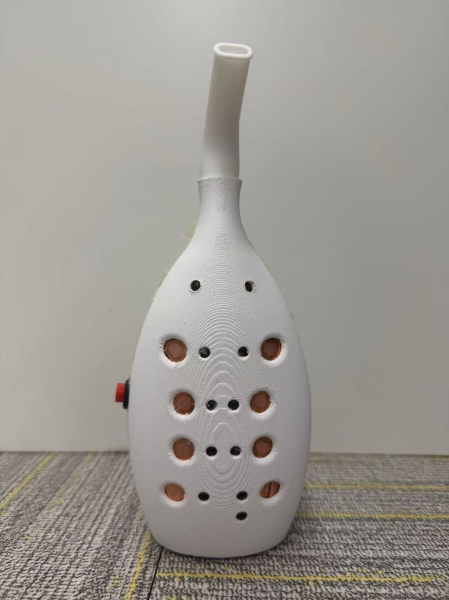
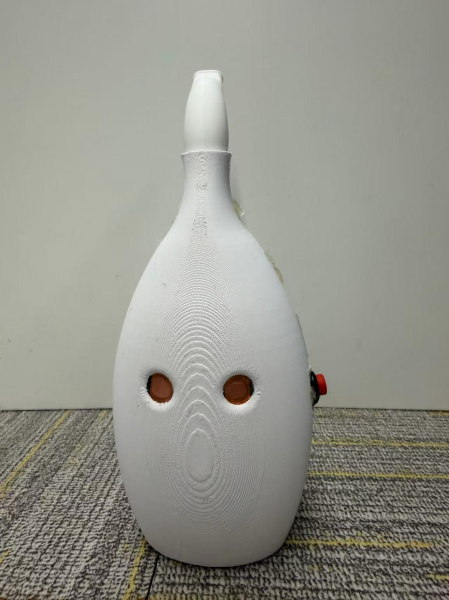
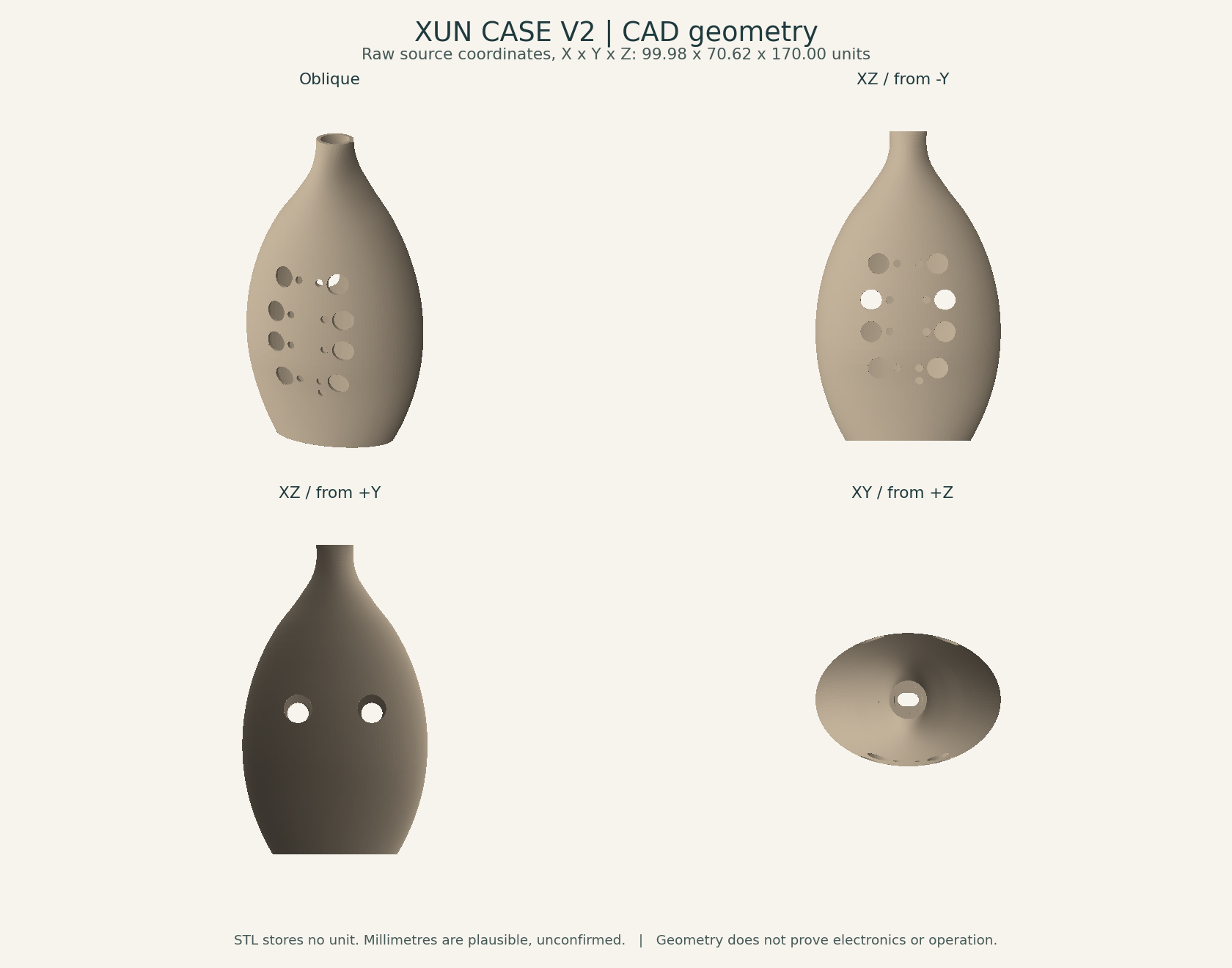
CURRENT INTEGRATED PROTOTYPE
Based on prototype software and engineering notes compiled in October 2026. Code capabilities are not unit-by-unit reliability verification. Dimensions, weight and battery life are not published as validated specifications.
| Controller | ESP32 Dev Module / WROOM-32 |
|---|---|
| Touch sensing | MPR121 · 11 inputs, E0–E10; one split touch position represents a half-hole state |
| Light guidance | 11 LEDs; the appearance plan puts all cues on the front, with no rear light holes. CAD alignment remains to be verified. |
| Breath sensing | SEN0343 / LWLP differential pressure sensor; adjustable trigger threshold, not continuous dynamics control |
| Range & samples | G3–D5 · 20 consecutive semitones · WAV stored in ESP32 Flash |
| Audio path | ESP32 → I²S → MAX98357A / DFR0954 → speaker |
| Device control | BLE web bridge / device Wi-Fi; control requests and status, not Bluetooth audio streaming |
| Songs & records | MIDI conversion and on-device song library; no personal accounts, long-term records or cloud sync |